Finished-surface drainage
Ask the installer to explain the intended surface levels and discharge route. Include garage thresholds, patio doors, adjoining concrete, landscaping and downspouts.
Questions for Salem and Keizer driveway, patio and RV-pad projects: where water starts, where it travels, and how construction and curing will be protected.
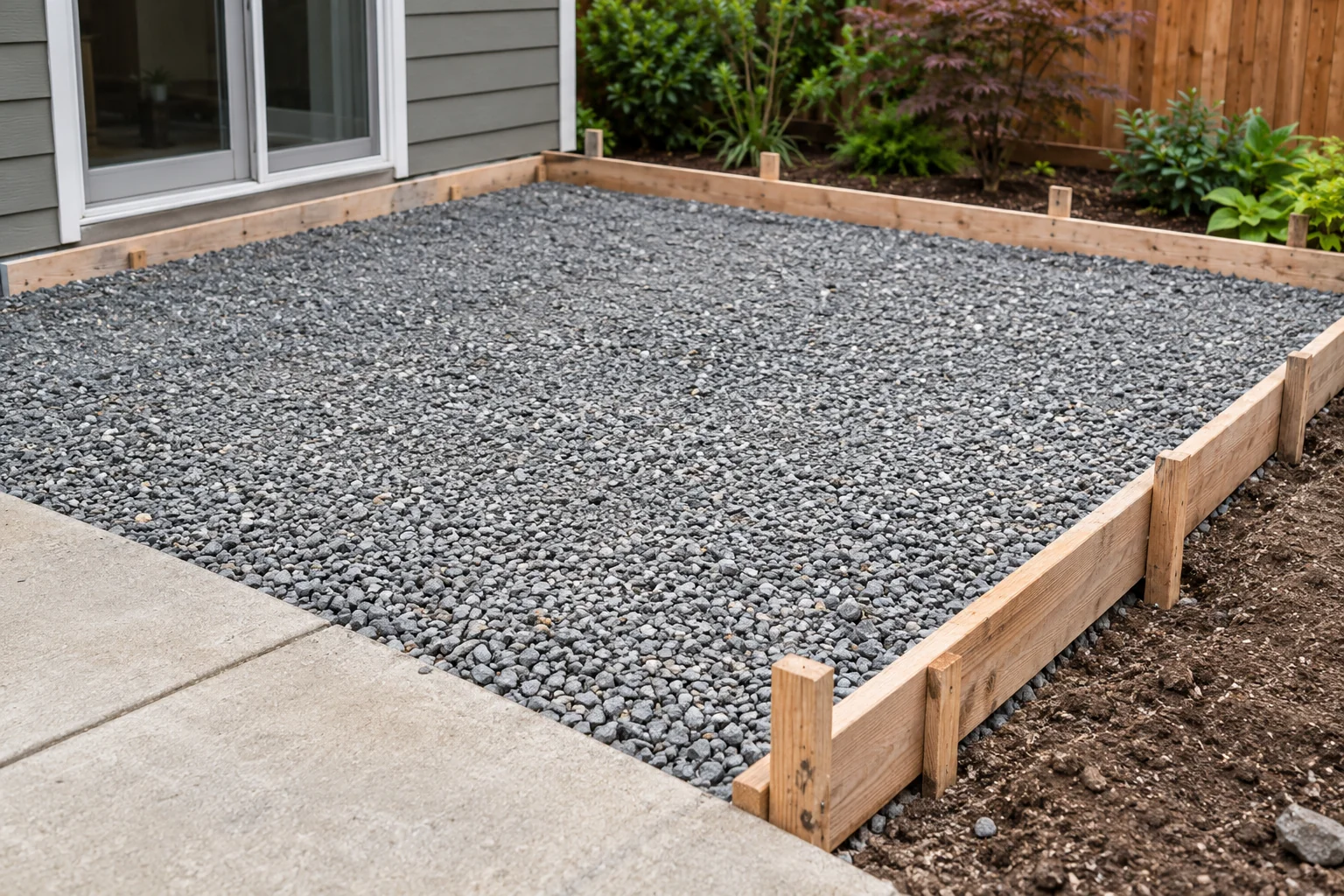
Photograph the space during or just after rain. Note where water collects, whether it comes from a downspout or neighboring grade, and whether it moves toward the garage, doorway or house.
Bring those observations to the site visit. A replacement slab, overlay or new drain should be considered as part of a water-management plan rather than treated as an automatic cure for every wet area.
Ask the installer to explain the intended surface levels and discharge route. Include garage thresholds, patio doors, adjoining concrete, landscaping and downspouts.
Ask what weather or ground conditions would delay placement. Agree on who makes the scheduling call, how the prepared base will be assessed and how fresh work will be protected.
Curing manages moisture and temperature while strength develops. Ask for a method and return-to-use instructions for the actual mix and conditions.
Technical background: NRMCA’s Curing In-Place Concrete guide. This is not a site design or a fixed schedule for driving on your slab.
Changing the slope, adding a channel drain, using a permeable surface or adjusting a downspout each affects where water ends up. Ask which option fits the property and whether discharge needs city review. Do not assume water can simply be directed to a neighboring property or connected to an existing system.
For stamped or sealed concrete, ask how the selected texture and sealer behave when wet. A decorative image cannot establish the finished surface’s traction. Discuss a suitable treatment and the ongoing maintenance with the installer.
Clear answers make for better decisions.
Only if the work addresses the cause. Ask for a plan that considers surface elevations, adjoining areas, downspouts and the discharge route.
The installer should assess the forecast, ground, protection and mix. Agree on the conditions for postponing work rather than assuming every rainy or dry day is suitable.
Appearance alone does not establish strength. Follow the installer’s written instructions for the mix, conditions and expected loads.
Tell us a little about the space, the project, and what you have in mind.